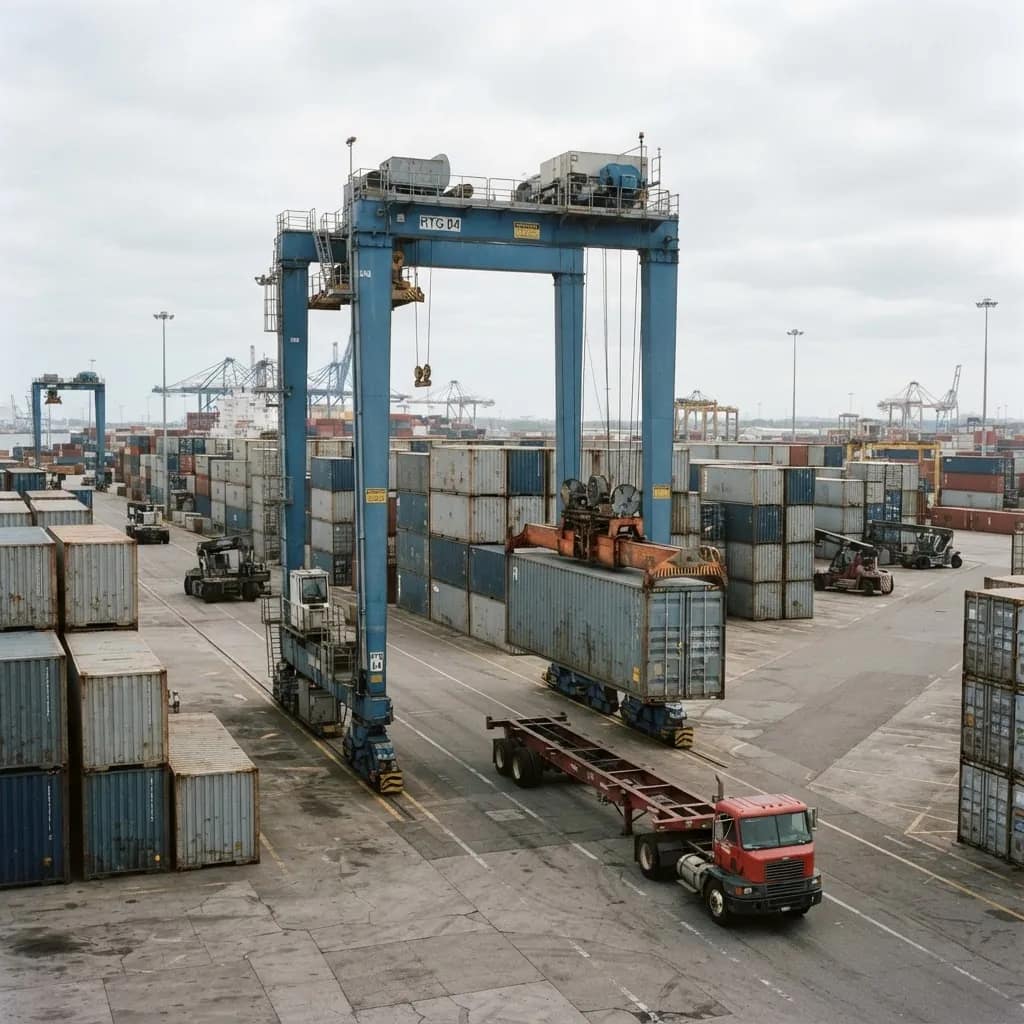
FCL & LCL · South China → West and East Africa
Sea freight from China to Africa, FCL and LCL
Full container and consolidation services from Shenzhen, Guangzhou and Ningbo to Lagos, Mombasa, Tema and Dar es Salaam, with destination clearance and door delivery available as one package.
How long does sea freight from China to Africa take?
Port to port, Shenzhen to Lagos runs roughly 25 to 30 days, Mombasa 22 to 28 days, Tema 28 to 34 days and Dar es Salaam 24 to 30 days. Add 5 to 10 days for destination clearance and door delivery. These ranges assume normal sailing schedules and exclude customs inspection and port congestion.
Information updated: August 2026
Main gateways and planning ranges
Use these as planning figures, not guarantees. We confirm the actual sailing schedule at the time of booking and report delays as they happen.
| Destination | Main port | FCL port to port | Door to door |
|---|---|---|---|
| Nigeria | Apapa / Tin Can, Lagos | 25 - 30 days | 30 - 40 days |
| Kenya | Mombasa | 22 - 28 days | 28 - 38 days |
| Ghana | Tema | 28 - 34 days | 34 - 44 days |
| Tanzania | Dar es Salaam | 24 - 30 days | 30 - 40 days |
Choosing between a full container and consolidation
The right choice depends on your volume. Below is the practical guidance we give customers before quoting.
FCL — full container load
Best when your cargo fills most of a 20ft or 40ft container. Lower cost per cubic metre, less handling, and the container is not opened for consolidation en route.
- 20ft holds roughly 28 cbm of usable volume
- 40ft holds roughly 58 cbm, 40ft HQ roughly 68 cbm
- Preferred for furniture, machinery, building materials and bulk stock
LCL — consolidation
Best when your cargo is below roughly 15 cbm. You pay for the space you use and share the container with other shippers.
- Charged by cubic metre or revenue tonne, whichever is greater
- Adds consolidation and deconsolidation time at both ends
- Preferred for trial orders, samples and regular small restocks
Sea freight questions
How do I decide between FCL and LCL?
As a rough guide, below 15 cbm LCL is usually cheaper, and above 20 cbm a 20ft container is usually cheaper and faster because it avoids consolidation handling. Between those figures it depends on the destination and the current rate, so send us your carton dimensions and weight and we will price both options so you can compare.
What is the difference between CIF and DDP for sea freight?
Under CIF our responsibility ends at the destination port, and you arrange clearance, duty and collection yourself. Under DDP we continue through destination clearance, duty payment and delivery to your address. CIF has a lower headline rate but you carry the clearance risk and the port charges; DDP has a higher rate that already contains those costs.
How is LCL volume measured for charging?
LCL is charged on the greater of cubic metres or revenue tonnes, measured on the outer carton dimensions after packing, not on the product dimensions. Irregular shapes are measured on the smallest rectangular box that contains them. Send us the actual carton sizes and we will calculate the chargeable volume before you commit.
Shipping cargo to Africa? Send us the details
We check certification and restricted-cargo rules first, then quote an all-in door-to-door price and transit time.
- Phone
- +86 188 2282 1890
- +86 188 2282 1890
- Business hours
- Mon to Sat, 9:00 - 18:00 (GMT+8)